

Carbohydrates: Tactical Energy, Not the Enemy
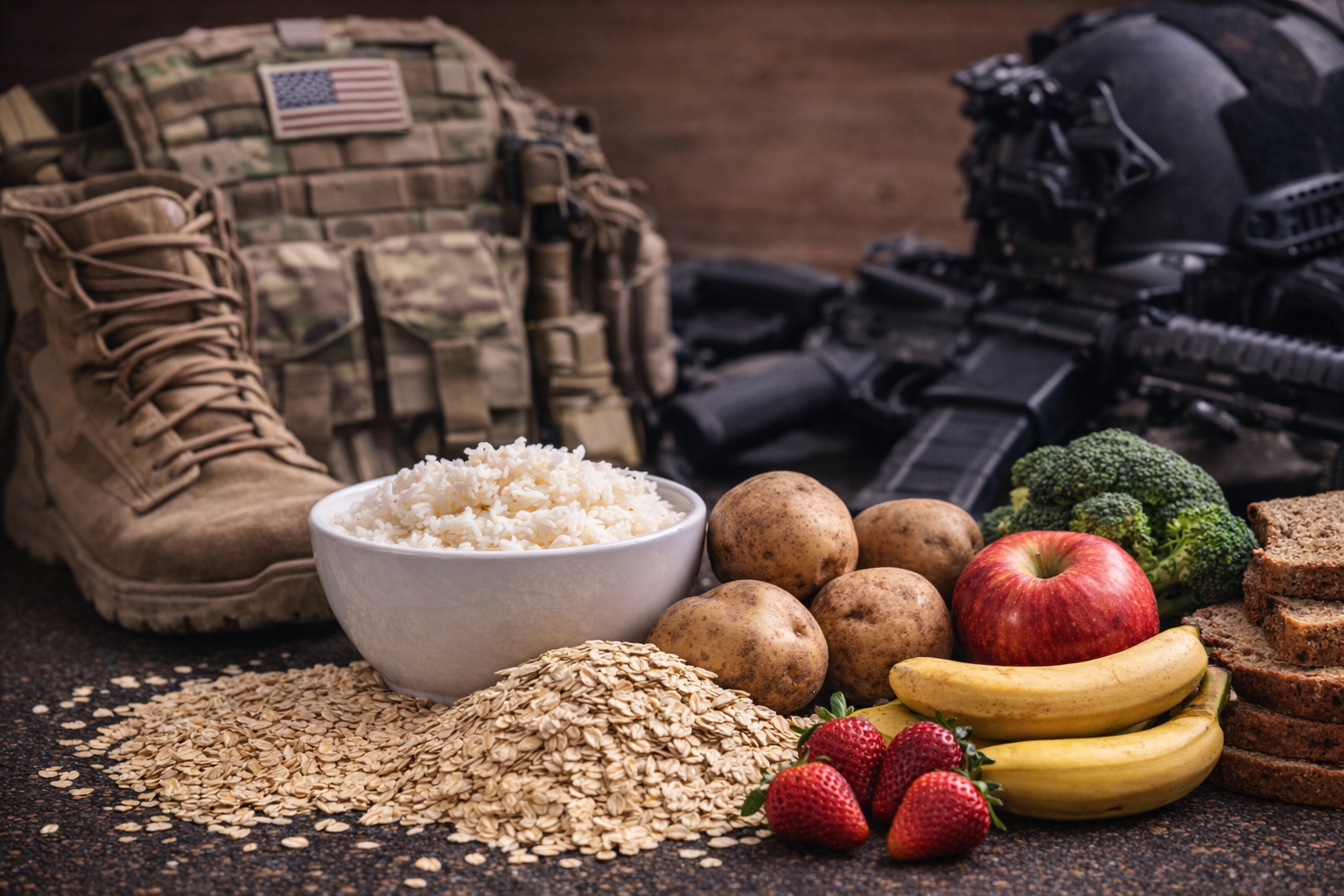
How Smart Carb Use Fuels Performance, Recovery, and Readiness
In military and tactical populations, carbohydrates get misunderstood fast. Somewhere along the line, carbs were labeled the problem. They’re not. Poor timing, poor quality, and poor planning are.
Carbohydrates are the body’s most efficient fuel for high-output work. When training demands intensity, speed, load carriage, or endurance, carbs are not optional. They are operational energy.
Think logistics, not emotion.
Why Carbohydrates Matter for Tactical Performance
Carbohydrates replenish muscle glycogen, the stored fuel your body relies on during hard training, long workdays, and repeated bouts of effort. When glycogen runs low, performance drops. Strength fades. Reaction time slows. Recovery drags.
This isn’t theory. It’s physiology.
Research summarized by the International Society of Sports Nutrition (ISSN) shows that adequate carbohydrate intake improves training capacity, preserves lean mass, and accelerates recovery during high-demand periods.
In short: carbs keep you operational.
The Real Mistake With Carbs
The problem isn’t eating carbohydrates.
The problem is eating carbohydrates without intent.
Tactical nutrition prioritizes:
The right carbs
At the right time
In the right amounts
When carbs are treated as fuel instead of filler, they work exactly as intended.
Timing Carbohydrates for Maximum Effect
Before Training
Carbohydrates consumed before training provide immediate fuel for strength, power, and endurance. This improves output and delays fatigue, especially during longer or more intense sessions.
After Training
Post-training carbohydrates replenish glycogen stores and support recovery. When paired with protein, they enhance muscle repair and prepare the body for the next session.
Active Days
Higher daily activity demands higher carbohydrate intake. This includes long walks, ruck marches, loaded carries, conditioning work, or multiple training sessions.
Rest or Low-Activity Days
Carbohydrate intake can be slightly reduced when demand is lower. This maintains energy balance without unnecessary excess.
This approach aligns with guidance from the Academy of Nutrition and Dietetics, which emphasizes carbohydrate periodization based on workload rather than elimination.
Choosing the Right Carbohydrate Sources
Quality matters. Whole, minimally processed carbohydrates deliver energy alongside fiber, vitamins, and minerals that support digestion and metabolic health.
Reliable options include:
Rice, potatoes, and oats for dense, efficient fuel
Fruits and vegetables for fast energy plus micronutrients
Whole grains in moderate portions for sustained output
These foods provide predictable energy without the crashes associated with ultra-processed sugars.
Carbohydrates and Recovery
Carbohydrates don’t just fuel work. They reduce stress hormones after training, support immune function, and improve sleep quality when used appropriately.
Research from the U.S. Department of Defense shows that insufficient carbohydrate intake in military personnel is associated with increased fatigue, slower recovery, impaired cognitive performance, and higher injury risk during sustained operations.
Fuel shortages create performance liabilities.
Tactical Nutrition Mindset
Carbohydrates are supplies.
You don’t hoard them unnecessarily.
You don’t run missions without them.
Eat with intent.
Time your fuel.
Match intake to demand.
That’s how carbs stop being feared and start being effective.
Summary
Carbohydrates are not the enemy. Mismanagement is. When timed and sourced correctly, carbs improve training output, speed recovery, and sustain long-term readiness.
Tactical nutrition isn’t about restriction.
It’s about control.
Think deployment logistics, not chaos.
Sources
International Society of Sports Nutrition (ISSN)
International society of sports nutrition position stand: nutrient timing (Full article)
https://link.springer.com/article/10.1186/s12970-017-0189-4 (Springer)
Journal of the Academy of Nutrition and Dietetics
Nutrition and Athletic Performance (Full PDF)
https://www.jandonline.org/article/S2212-2672(15)01802-X/pdf (Jan Online)
U.S. Department of Defense – Human Performance Resource Center (HPRC)
Macronutrients 101 (Carbs guidance + performance nutrition context)
https://www.hprc-online.org/nutrition/performance-nutrition/macronutrients-101 (HPRC-online.org)
U.S. Department of Defense – Human Performance Resource Center (HPRC)
Underfueling carbs can lead to underperformance (Basics)
https://www.hprc-online.org/nutritional-fitness/performance-nutrition/underfueling-carbs-can-lead-underperformance-basics (HPRC-online.org)
U.S. Department of Defense – Human Performance Resource Center (HPRC)
Should I carb load?
https://www.hprc-online.org/nutrition/performance-nutrition/should-i-carb-load (HPRC-online.org)
